

How Often Should You Bathe Your Dog? Build the Right Routine
Choose bathing frequency around the dog, product and skin condition, and investigate irritation without assuming that every frequent bath is harmful.
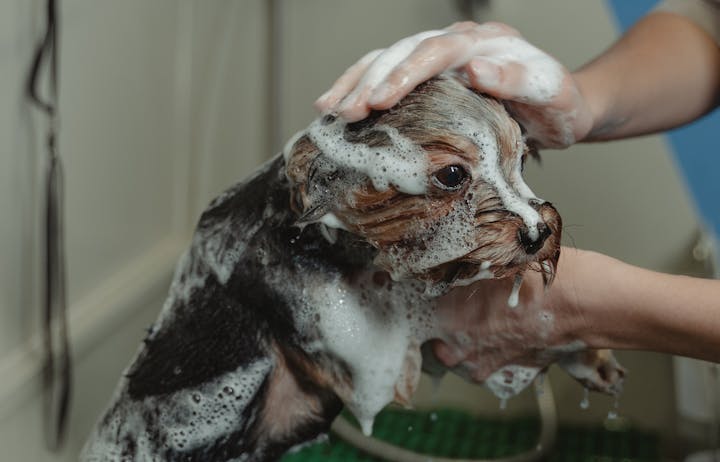
The practical answer
There is no single bathing interval for every dog. Wash for a reason, use appropriate products and follow a veterinary plan when bathing is part of treatment.
Separate routine cleaning from treatment
A dog that rolled in dirt, a dog with a high-maintenance coat and a dog prescribed medicated shampoo may need different schedules. VCA explains that frequency depends on coat, lifestyle and health, and that a vet may prescribe frequent bathing for skin disease. VCA Animal Hospitals: grooming and coat care.
Review the process before blaming the calendar
| Question | Why it matters |
|---|---|
| Why is the dog being washed? | Dirt, coat maintenance and prescribed treatment are different reasons. |
| Which product is used? | Suitability, dilution and contact time depend on the label or veterinary directions. |
| Is rinsing complete? | A rushed rinse can leave residue and confuse the assessment. |
| How is the coat dried? | The method must suit the coat and the dog’s tolerance. |
| When does discomfort appear? | A timeline is more useful than simply saying the dog has sensitive skin. |
Use a deliberate bath sequence
- Check the coat and skin before wetting. Leave painful areas or tight matting for appropriate assessment.
- Read the product directions and prepare the required amount.
- Use a comfortable water temperature and keep the dog secure.
- Rinse methodically, including places that are easy to miss.
- Dry appropriately and note the dog’s skin comfort afterwards.
Do not treat itching as proof of overwashing
Flaking, redness or repeated licking can have several causes. Changing shampoo every time can make it harder to identify the pattern. If symptoms recur, bring your product list and bathing record to the vet. Do not stop a prescribed course of bathing merely because a general article suggests washing less often.
Choose smaller care tasks when they are enough
A muddy paw or dirty patch may not require a full-body bath. Ask your groomer about a suitable between-visit routine for the coat. Use clean equipment and avoid applying deodorising sprays to mask a persistent smell. The purpose is to keep the dog comfortable and manageable, not to maintain a perfume.
A useful bathing record
- Date and reason for the bath.
- Product, dilution and any prescribed contact time.
- Rinsing and drying method.
- When any itching, redness or odour appeared.
- What changed from the previous routine.
Read next
- Why Your Dog Still Smells After a Bath
- Hot Spots After Wet Weather: Grooming Signs to Act On
- Sensitive Skin or Something More? Grooming Clues to Record
Sources and further reading
Guidance checked September 2026. The practical checklists and examples are VUNRO editorial guidance; the sources below support the underlying care or equipment principles.
Keep learning
More from the Blade Blog
Measure Shampoo Dilution Without Ambiguous Ratios
Read the guide →
The Dilution-Bottle Problem: What Grooming-Product Cultures Found
Read the guide →


